About the Project
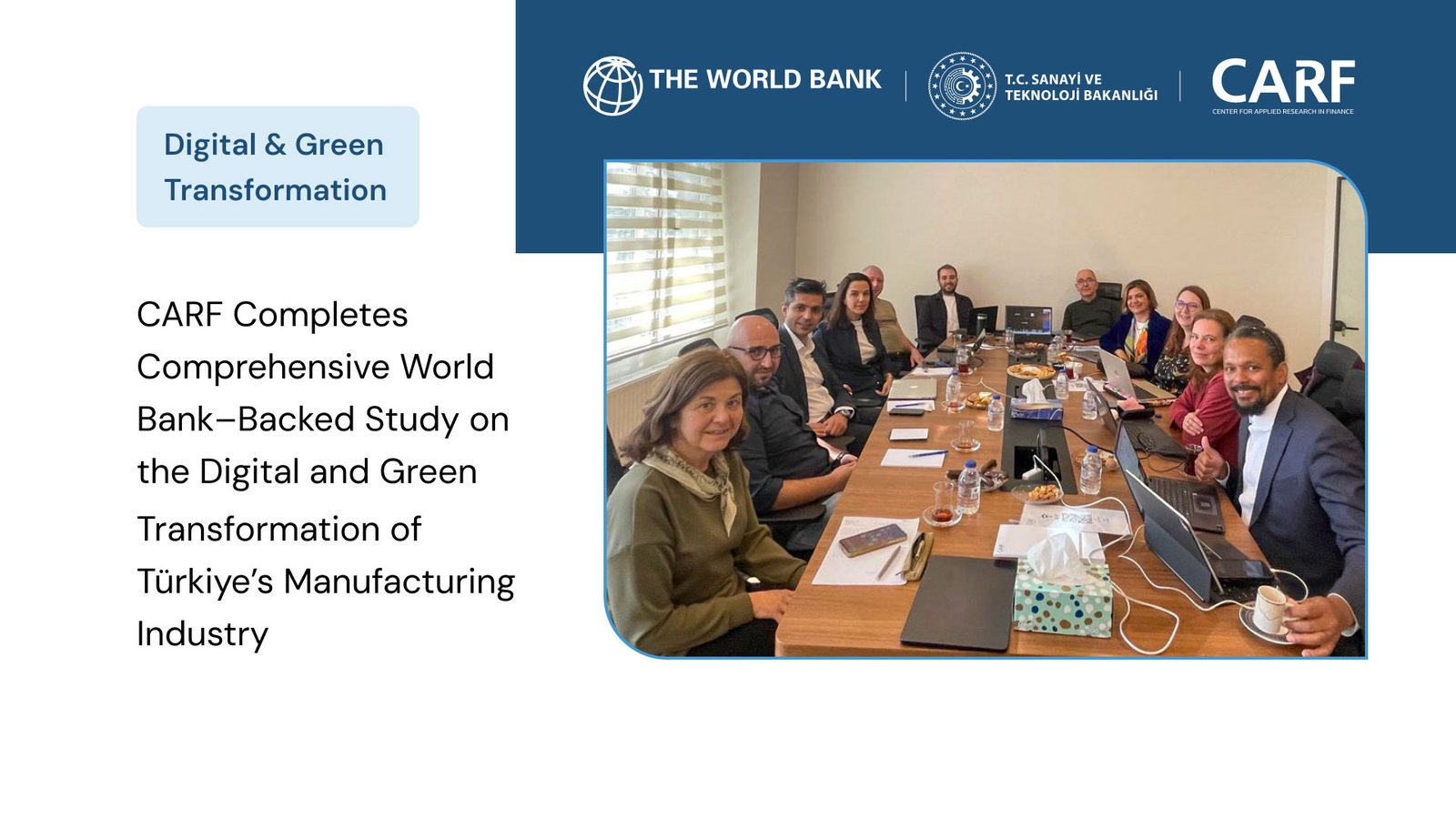
Under the “TransformIndustry” project, carried out in partnership with the Turkish Ministry of Industry and Technology and the World Bank, CARF conducted a comprehensive demand and feasibility assessment to lay the groundwork for a new credit mechanism supporting the digital and green transformation of Türkiye’s manufacturing sector. The study encompassed a multi-layered analytical process, ranging from the functioning of existing support programs to the real needs of firms on the ground and a wide stakeholder ecosystem, through to the economic returns of a possible financing model.
Pillars of the Project
Mapping of Existing Programs and Institutional Assessment: The Ministry’s Digital Transformation Program (DTP) and Green Transition Program (GTP) were reviewed end-to-end, with their application, evaluation, approval, and monitoring processes mapped in detail. The two programs’ strengths, common ground, and areas for improvement were compared, leading to concrete recommendations for making the processes more integrated, transparent, and firm-friendly.
Broad-Based Stakeholder Consultations: Structured consultations were conducted with ministry units, public support institutions, technical evaluation bodies, financial institutions, model factories, sector associations, and manufacturing firms that have undergone or are undergoing transformation. These consultations surfaced the real dynamics of the transformation process on the ground, the need for coordination across institutions, firms’ decision-making processes, and the operational obstacles encountered.
Nationwide Firm Survey: A large-scale field survey was conducted via face-to-face interviews with manufacturing firms across Türkiye’s regions and sectors. The survey captured firms’ current state of digital and green transformation, investment intentions, barriers to accessing finance, and awareness of public support programs.
Market Analysis and Beneficiary Profiles: Drawing on the survey, field research, and stakeholder consultation findings, the potential size and scope of the market addressable by a credit mechanism were assessed. Firms were segmented based on criteria such as scale, sector, export orientation, and transformation maturity, yielding distinct firm profiles (personas). For each profile, the challenges encountered at every stage of the transformation journey and the types of support needed were detailed.
Economic and Financial Feasibility Analysis: The value that the proposed credit mechanism would create for both investing firms and the national economy was assessed using internationally recognized methodologies. This analysis identified the critical design parameters that would make the mechanism sustainable and effective.
Key Results
- Digital and green transformation across Türkiye’s manufacturing sector is still at an early stage overall.
- The survey results indicate the need for an upward adjustment to the total loan amount that will be deployed by the World Bank. International competitive pressure and regulatory developments, particularly the EU Carbon Border Adjustment Mechanism, are making transformation an increasingly urgent priority for export-oriented firms.
- Firms face significant obstacles related to access to finance, lack of technical knowledge, shortage of qualified personnel, and limited institutional awareness, though these obstacles vary considerably by firm size, sector, and export orientation.
- While awareness of transformation programs is high among firms, the conversion of that awareness into concrete investment decisions remains low.
- Closing this gap requires an approach that reaches decision-makers directly, builds trust, and is tiered according to firms’ maturity levels.
- Concrete institutional improvements were identified, including simplifying application and monitoring processes, strengthening inter-institutional coordination, and establishing a persistent, firm-level “transformation profile.”
- The proposed credit mechanism shows a positive return potential for both participating firms and the Turkish economy, and, if properly designed, can serve as a sustainable and impactful investment instrument.
Next Steps
The findings of the study are shared with the Ministry of Industry and Technology and the World Bank, forming the basis for the final design of the new financing mechanism for Türkiye’s manufacturing sector. Building on these results, the next phase will focus on translating the recommendations into the operational design of the credit facility, including product structuring, targeting criteria, and delivery channels. CARF will continue to support this process as the program moves toward implementation, ensuring that the insights gathered from firms and stakeholders are reflected in the final facility design.