Authors: Prof. Dr. M. Levent KURNAZ
Journal / Source: CARF White Paper
ABSTRACT
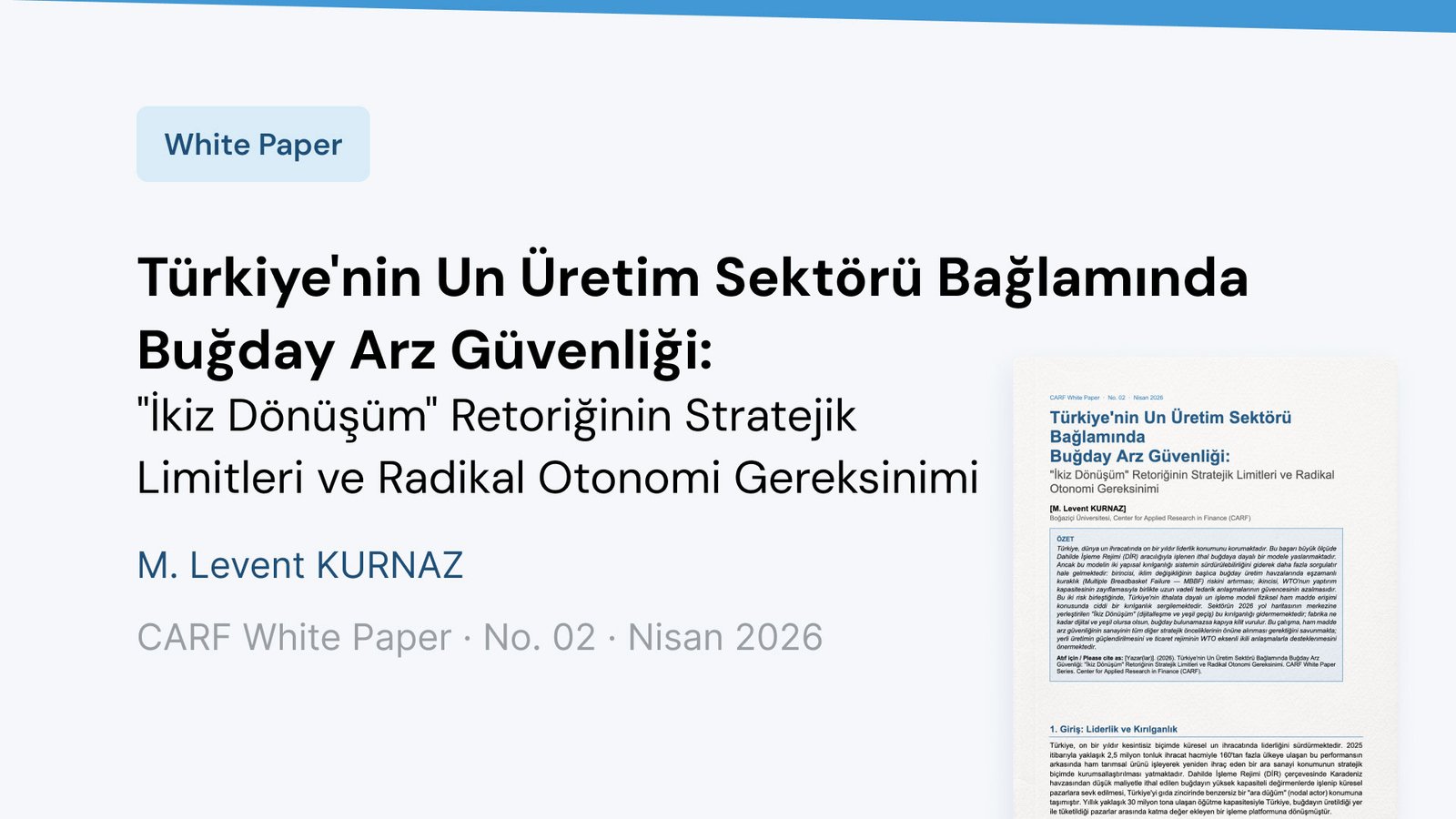
Türkiye has maintained its position as the world’s leading flour exporter for eleven consecutive years. This success is largely built upon a model dependent on imported wheat processed under the Inward Processing Regime (IPR). However, two structural vulnerabilities are increasingly calling into question the sustainability of this model: first, climate change is raising the likelihood of simultaneous droughts across major wheat-producing regions — a phenomenon referred to as Multiple Breadbasket Failure (MBBF); second, the weakening enforcement capacity of the WTO is eroding the reliability of long-term supply agreements. When these two risks converge, Türkiye’s import-dependent flour processing model exhibits significant vulnerability with respect to access to physical raw materials. The “Twin Transformation” (digitalization and green transition), positioned at the center of the sector’s 2026 roadmap, does not address this vulnerability. Regardless of how digital or green factories become, production ceases if wheat is unavailable. This study argues that raw material supply security must take precedence over all other strategic priorities in the industrial agenda. It proposes strengthening domestic production and reinforcing the trade regime through WTO-aligned bilateral agreements.