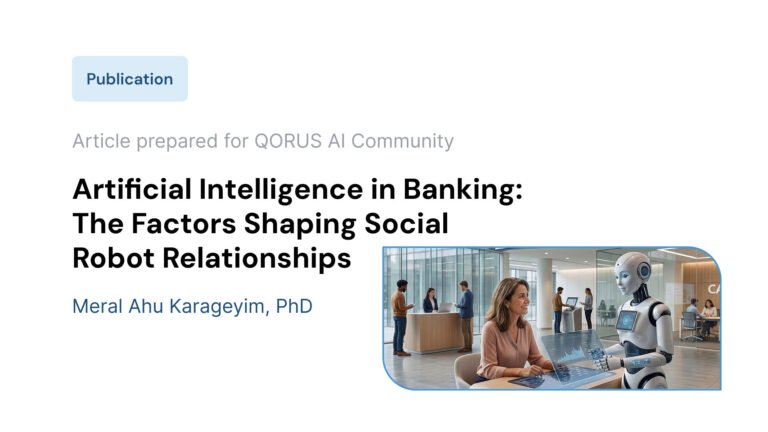
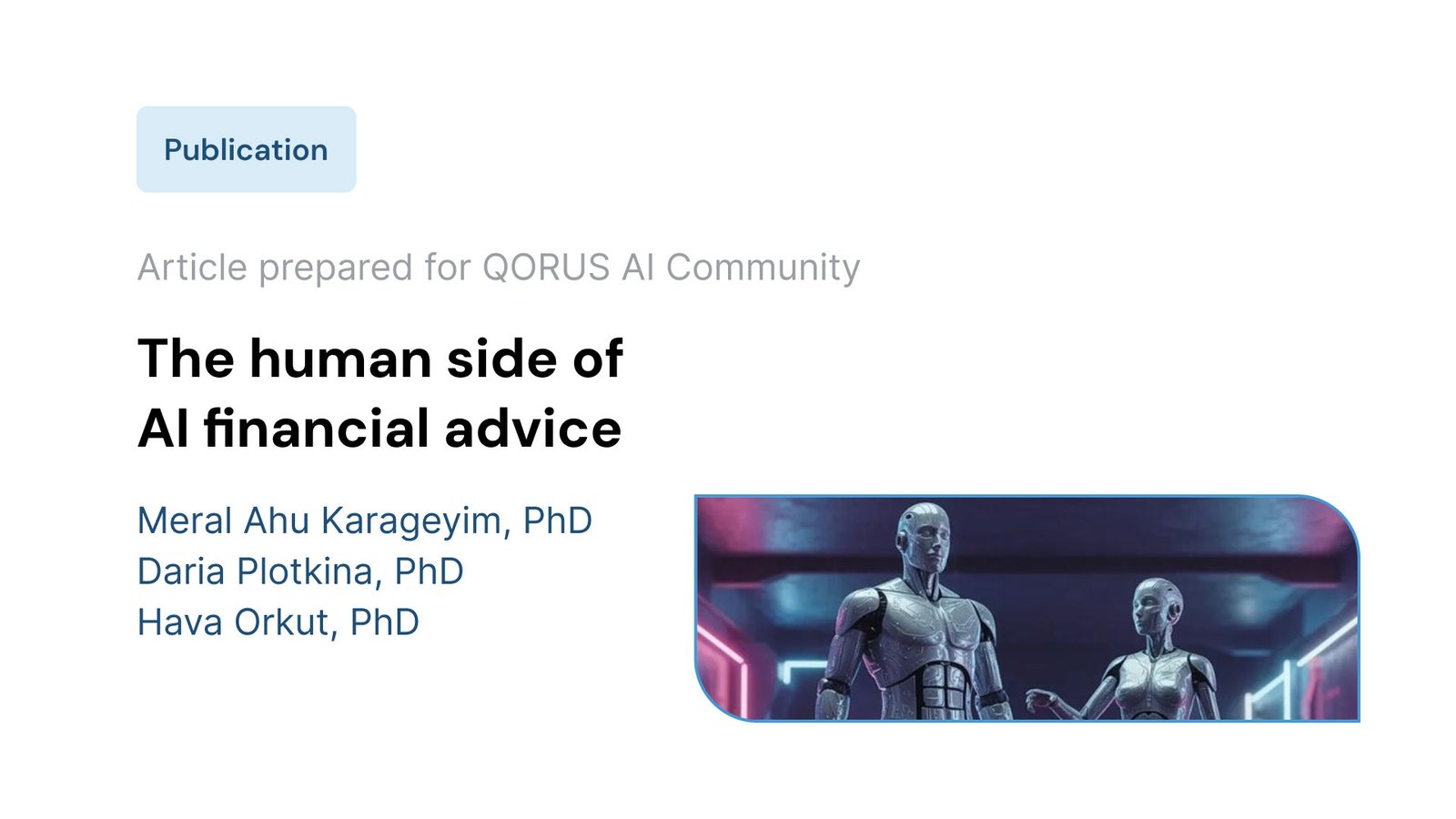
Dr. Meral Ahu Karageyim from CARF research Center, Dr. Daria Plotkina and Dr. Hava Orkut discussed their latest research with Qorus.
Some of their key findings are as follows:
What makes people trust a robo-advisor?
Our research, “Give Me a Human! How Anthropomorphism and Robot Gender Affect Trust in Financial Robo-Advisory Services,” shows that trust depends on much more than the quality of financial advice. People also evaluate who—or rather what—they believe is giving the advice.
* Human-like robo-advisors generate greater trust by increasing perceptions of social presence, competence, and persuasiveness.
* Gender stereotypes still influence AI evaluations. In our studies, human-like male robo-advisors were perceived as more competent and trustworthy, highlighting that biases can transfer from human experts to AI systems.
* There is no simple “AI versus human” future. Instead, the evidence shows that hybrid advisory models, where AI delivers speed, accessibility, and efficiency, while human advisors provide reassurance, explanation, and support for complex financial decisions.
For banks and financial institutions, the challenge is no longer simply adopting AI—it is designing AI that customers trust. As robo-advisory markets continue to expand globally, trust, transparency, and thoughtful user-centered design will become critical competitive advantages.
One of the most important takeaways from our discussion is that while AI technologies may be global, trust is local. Cultural differences, consumer expectations, and design choices all shape whether people are willing to rely on AI for high-stakes financial decisions.
 Read the full article here: The human side of AI financial advice
#ArtificialIntelligence #RoboAdvisors #FinTech #Banking #ConsumerBehavior #Trust #Anthropomorphism #HumanAIInteraction #FinancialServices #DigitalTransformation #MarketingResearch