The tokenized bank is not a future concept. It is already taking shape — quietly, through the infrastructure that powers modern finance.
Much of the public discussion around tokenization focuses on disruption. In practice, the more important shift is structural: banks are gradually redesigning payments, collateral, liquidity, and settlement processes for a financial system that is increasingly real-time, cross-border, and always on.
At CARF (Center for Applied Research in Finance), we continue to support research at the intersection of financial technology, digital finance, and regulatory innovation. In that context, we are pleased to contribute to Qorus with a new article examining what the “tokenized bank” really means in operational terms — beyond the hype.
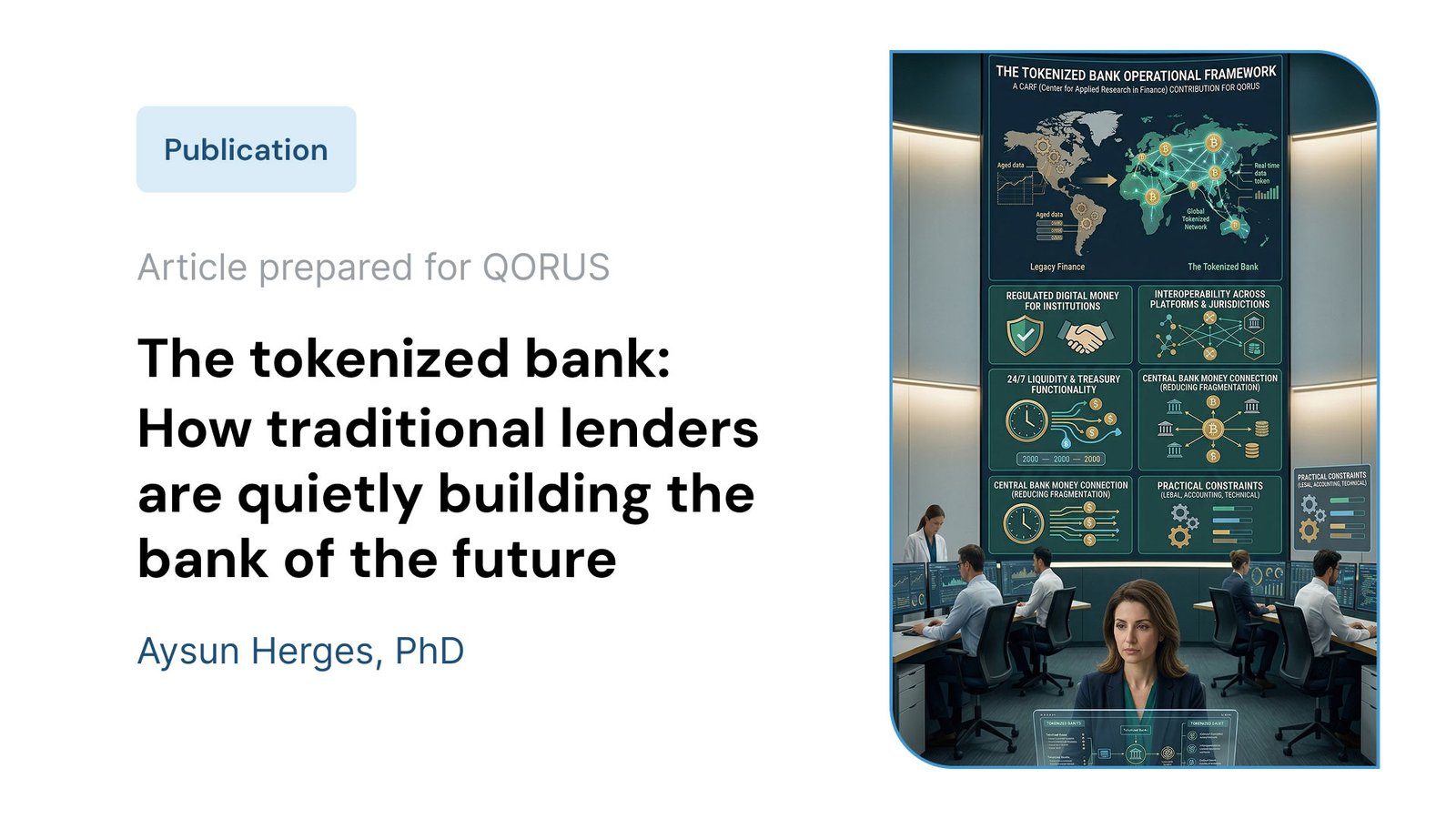
In this article, our researcher Aysun Herges, PhD, looks at the developments that matter most and the broader direction they suggest for banking:
• the move toward regulated digital money in institutional settings
• the growing importance of 24/7 liquidity and treasury functionality
• the need for interoperability across platforms and jurisdictions
• the role of central bank money in reducing fragmentation
• and the practical constraints that still stand in the way of scale, from legal treatment to accounting and technical standards
The institutions most likely to lead this transition may not be the ones making the most noise. They will be the ones solving the operational, regulatory, and infrastructure challenges that make tokenization usable in the real world.
Read the full article on Qorus: https://www.qorusglobal.com/content/31053-the-tokenized-bank-how-traditional-lenders-are-quietly-building-the-bank-of-the-future
#Tokenization #DigitalFinance #BankingInnovation #FinancialTechnology #BlockchainInBanking #FinTech #RegTech #CARF