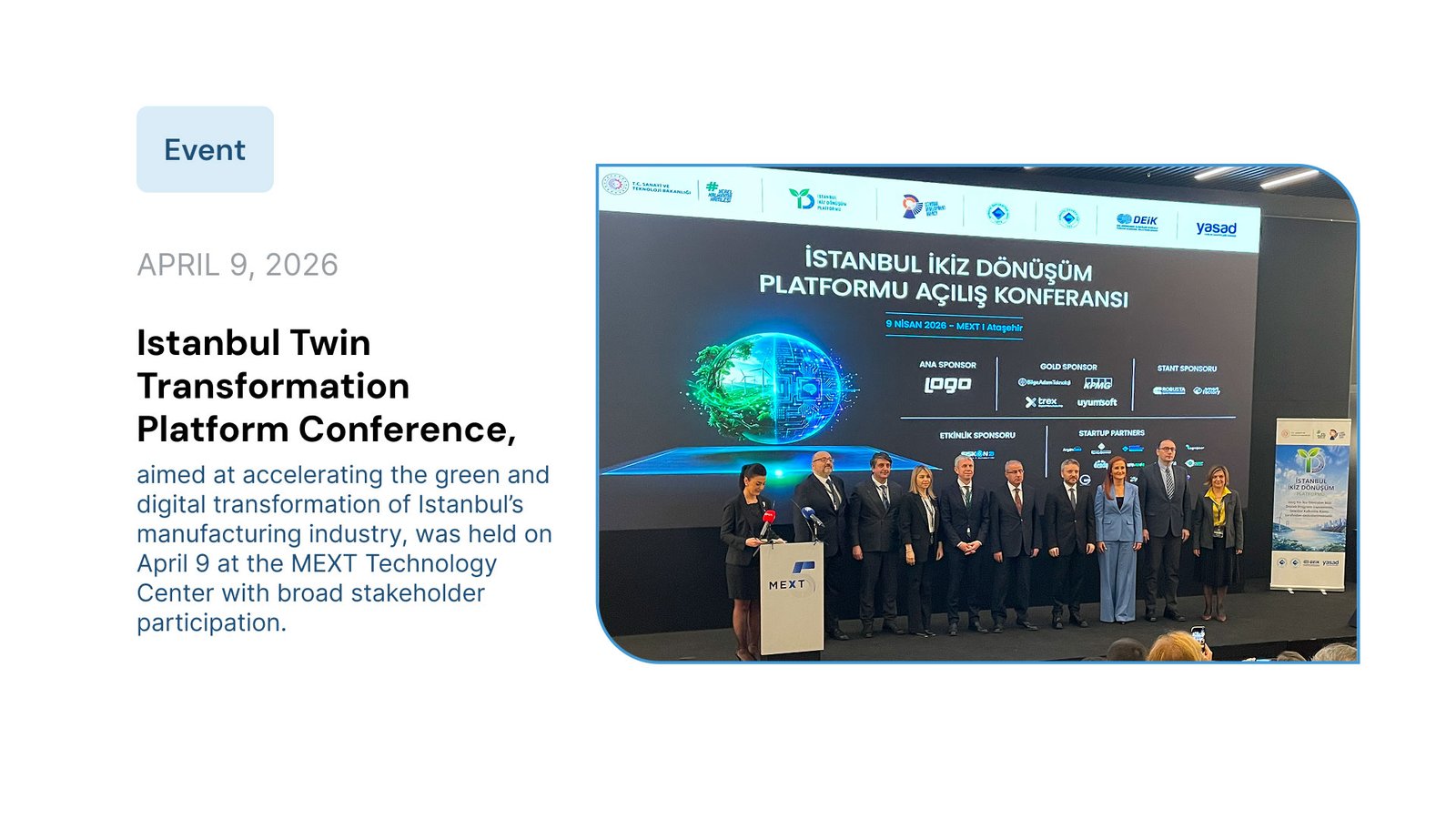
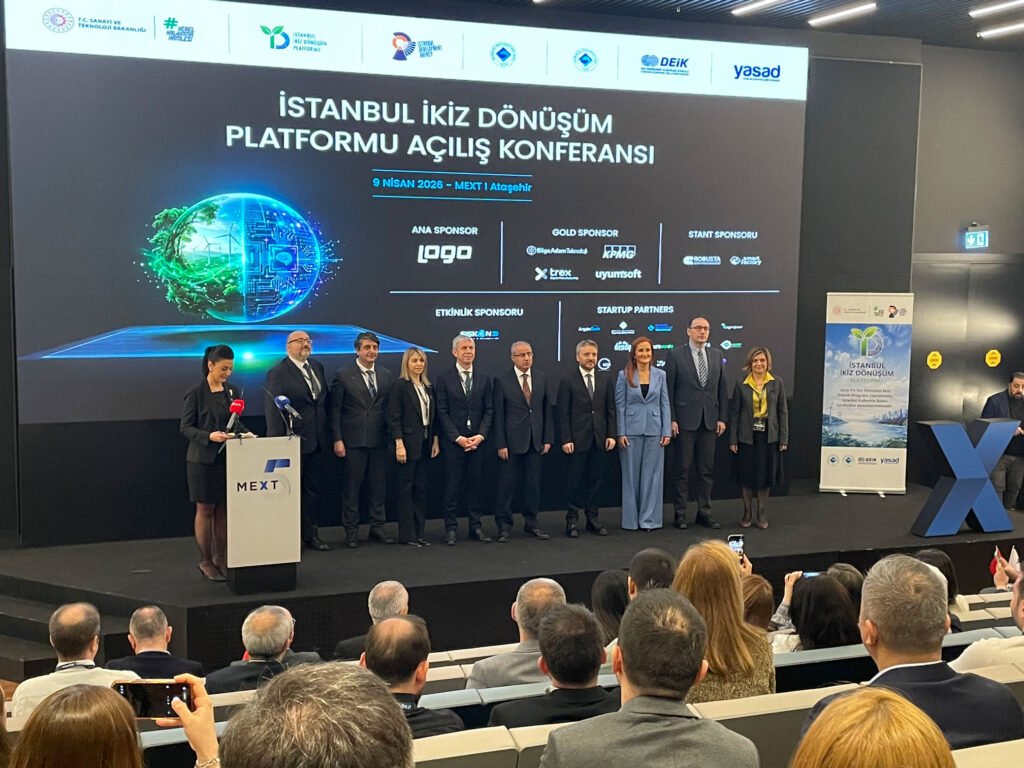
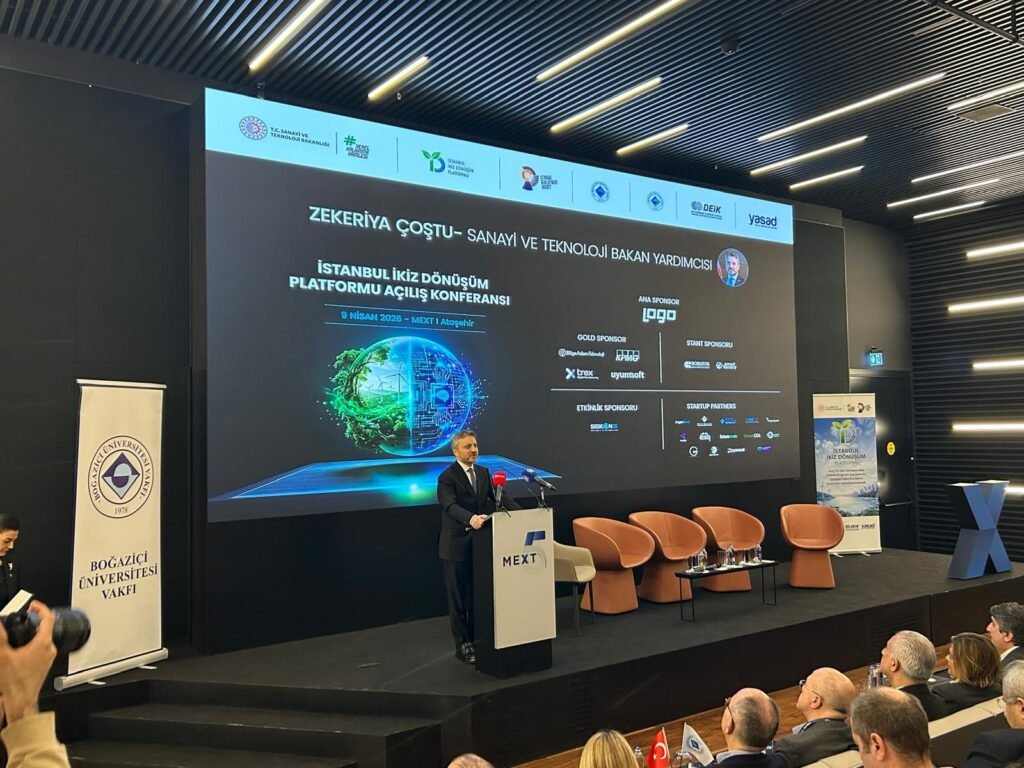
Istanbul Twin Transformation Platform Conference, aimed at accelerating the green and digital transformation of Istanbul’s manufacturing industry, was held on April 9, 2026 at the MEXT Technology Center with broad stakeholder participation.
Istanbul Twin Transformation Platform, launched under the leadership of the Boğaziçi University Foundation (BÜVAK), with the support of the Republic of Türkiye Ministry of Industry and Technology and the Istanbul Development Agency (İSTKA), and in partnership with Boğaziçi University, Foreing Economic Relations Board (DEİK), and the Software Industrialists Association (YASAD) serves as a collaborative platform bringing together stakeholders from industry, the public sector, academia, and the technology ecosystem.
As CARF, we were pleased to take part in this significant event.
We are pleased to share key notes and insights from the conference, as shared by our faculty member, İffet İyigün Meydanlı;
We had the opportunity to listen to distinguished speakers at the “Istanbul Twin Transformation Platform Conference” held on April 9, 2026. It was a valuable gathering where all stakeholders came together to discuss the necessity of twin transformation processes, the support structures available through various centers, successful case examples, and the organizational implications of these transformations.
Many thanks to all institutions and individuals who contributed.
Key takeaways from the sessions:
- Only a small percentage of SMEs are aware of the transformation centers in Istanbul that support companies in twin transformation.
- These centers play an active role in areas such as: current state assessments, employee training, development of twin transformation projects, applications for financial support programs.
- A consistent message across all sessions was that investment in people and organizational transformation must precede technology investments.
- Boğaziçi University offers programs under BÜYEM to support organizational transformation.
- To increase SME awareness, amplify the impact of centers, and accelerate transformation, key areas of collaboration—supported by public institutions—can be summarized as:
– improving quality
– conducting and sharing impact analyses
– facilitating access to finance
– investing in skills and capability development
– creating a regulatory environment that encourages SMEs to take action - Digital and twin transformation are often perceived as goals, but in reality, they are tools to achieve a greater purpose.
- Companies that successfully implement this transformation are able to sustain profitability and growth despite increasing uncertainty.
- In today’s environment, growth alone is no longer sufficient; resilience and sustainability have become equally critical.
- Given current conditions, industry must address technology and energy together, rather than as independent variables.
A few striking remarks:
- “In Türkiye, more is spent on sustainability reporting than on actual sustainability projects.”
- “Our industry struggles to manage energy costs because it cannot effectively track and analyze data.”
- “Our habits are our greatest constraints—therefore, individual transformation is critical.”
- “Capability development will be a key priority in the coming period.”
https://www.linkedin.com/feed/update/urn:li:activity:7449440763567861760
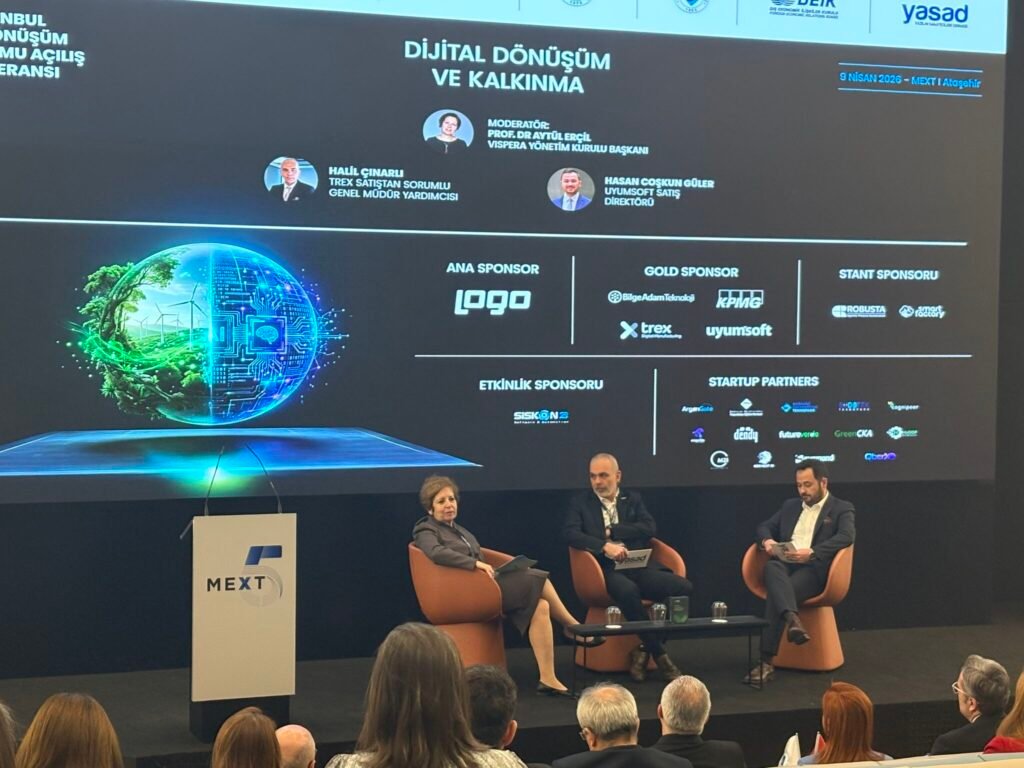
Transformation Ecosystem in Türkiye: Panel Highlights and Discussion
Moderated by Dr. Sertaç Yerlikaya | Featuring center leaders and experts supported by İstanbul Development Agency (İSTKA), TÜBİTAK, and European Union programs
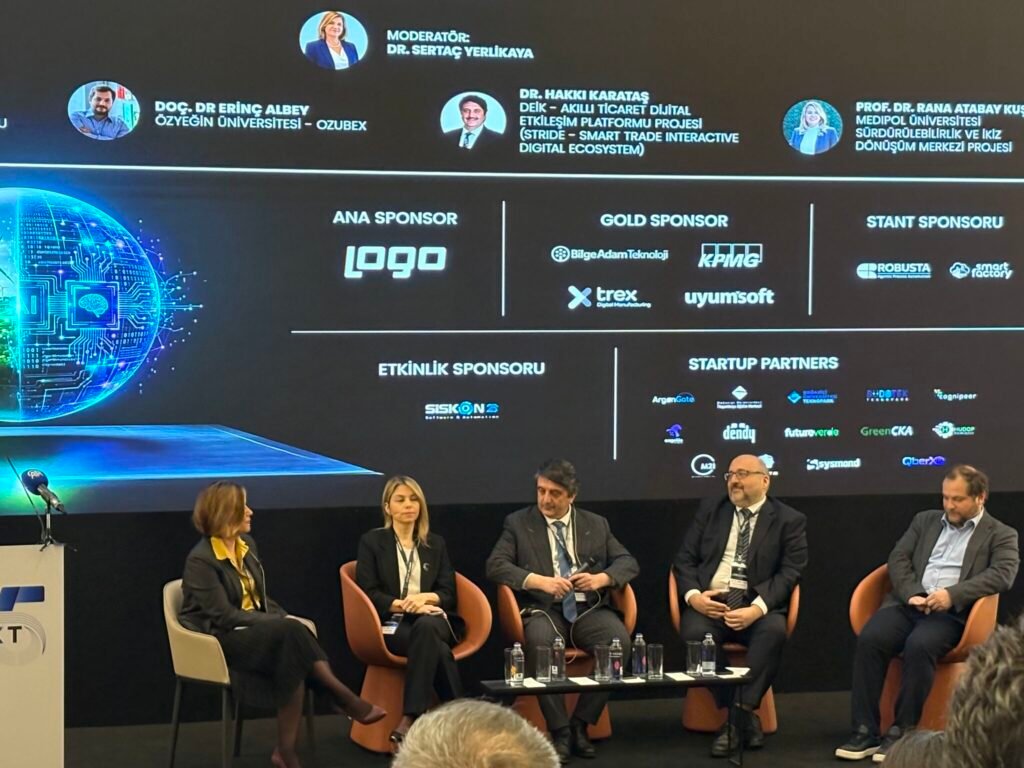
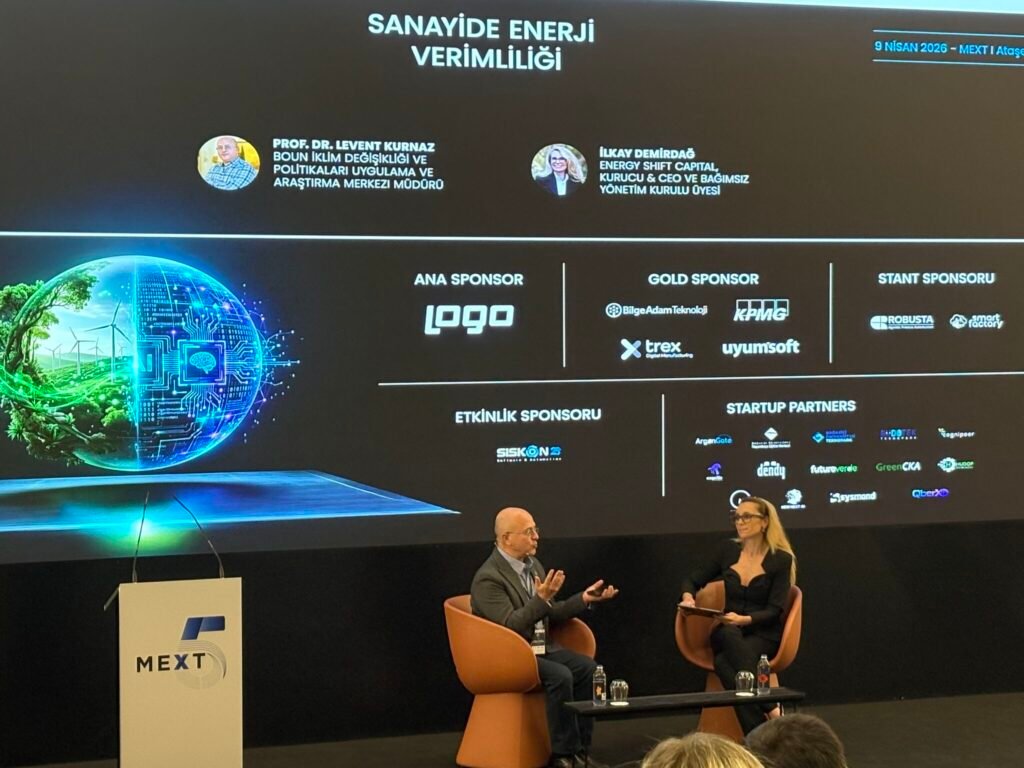
The panel titled “Transformation Ecosystem in Türkiye”, held as part of the opening conference, was moderated by Dr. Sertaç Yerlikaya.
The session featured Asst. Prof. Ali Coşkun (CARF Board Member) as a speaker, alongside distinguished guest speakers including Assoc. Prof. Erinç Albey (Özyeğin University – OzuBEX), Dr. Hakkı Karataş (DEİK – STRIDE Project: Smart Trade Digital Interaction Platform), and Prof. Rana Atabay Kuşçu (Medipol University – Center for Sustainability and Twin Transformation).
The discussion addressed green and digital transformation processes in industry from a multi-dimensional perspective. It was emphasized that the success of technology investments depends not only on technical infrastructure, but also on organizational and cultural transformation—starting with strong leadership commitment.
For a more in-depth exploration of the discussion, please access the full session recording below.